
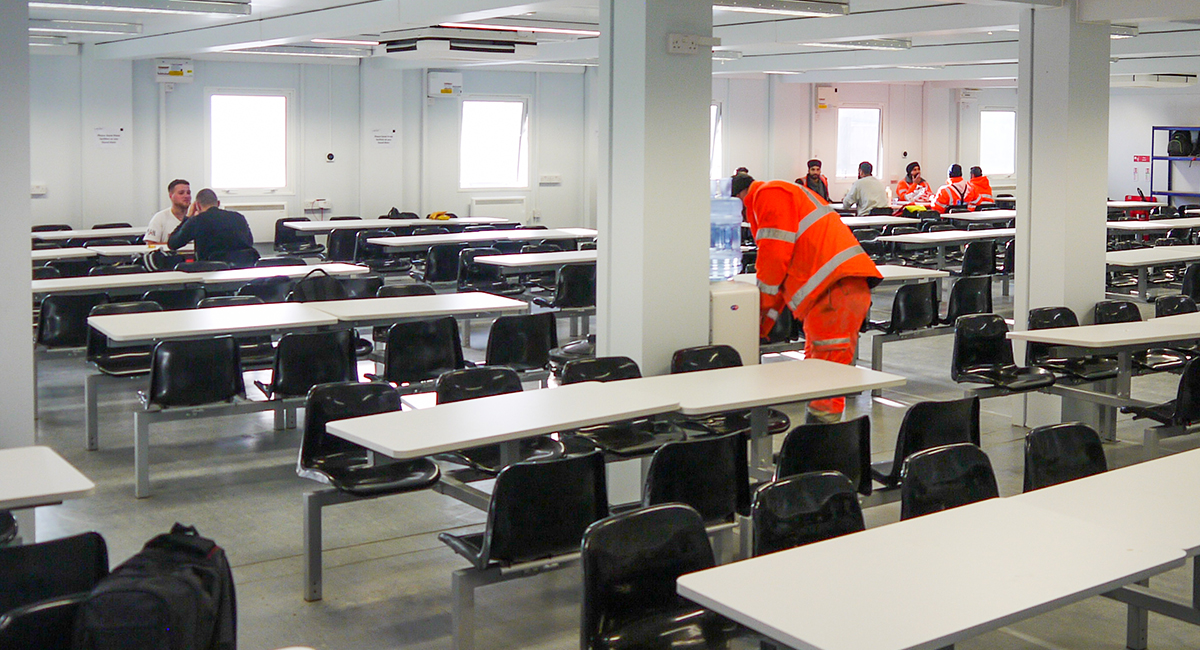
Construction site catering plays a far bigger role than simply feeding workers. On live construction projects, catering is a welfare requirement, a productivity lever, and a risk-management tool — particularly on large or complex sites.
At scale, poorly planned catering leads to lost time, compliance issues, congestion at site gates, and declining morale. Done properly, it keeps operatives on site, supports welfare standards, and helps principal contractors maintain control throughout the build programme.
This guide explains what construction site catering involves, why it matters, and how best practice operators deliver it safely and reliably.
What Is Construction Site Catering?
Construction site catering refers to the provision of on-site food and beverage services within the secure perimeter of a live construction project. This can range from cold-only welfare setups during early mobilisation through to fully staffed hot canteens serving hundreds of operatives daily. Professional providers deliver construction catering services
On larger projects, catering is typically delivered as part of a wider welfare strategy, designed to support long shifts, phased site growth, and changing workforce demands.
Why On-Site Catering Matters on Live Construction Projects
On busy sites, time off-site is time lost. Without adequate provision, operatives leave site to source food, increasing downtime, security risk, and site congestion.
Well-managed on-site construction catering services
support:
- Productivity through reduced downtime
- Compliance with welfare expectations
- Security by keeping operatives within the perimeter
- Improved morale and retention
- Better programme control during peak activity
For principal contractors, catering is not a “nice to have” — it is an operational control measure.
On larger or more complex sites, effective catering depends on proper planning and early mobilisation, which we cover in detail in our guide to planning construction catering for large-scale projects.
Welfare, HSE Standards & Compliance
UK construction sites must meet welfare standards covering access to food, drinking water, rest areas, and hygiene facilities. As sites grow in scale and duration, welfare catering becomes increasingly critical.
Specialist operators understand how welfare catering fits into live construction environments, including:
- Safe food production on operational sites
- Allergen control and hygiene management
- Queue reduction and peak-time service flow
- Integration with site welfare layouts
General caterers often struggle here. Construction specialists do not.
Scaling Catering as Projects Grow
Construction projects evolve constantly. Workforce numbers fluctuate, shift patterns change, and facilities develop as the build progresses.
High-performing contractors rely on end-to-end construction catering
that can:
- Start with cold or hybrid provision
- Expand to hot food as utilities allow
- Scale staffing during peak workforce periods
- Support site events such as BBQs or Christmas meals
Catering that cannot scale becomes a constraint. Catering that evolves becomes an asset.
Why Specialist Construction Caterers Outperform General Providers
Construction is not hospitality. It is high-risk, time-critical, and operationally complex.
A specialist construction catering company
works exclusively within live construction environments and understands:
- Principal contractor expectations
- Site logistics and access constraints
- Short break windows and high throughput
- Long-term consistency across multi-year projects
This experience is what separates specialist operators from general providers.
Experience, Longevity & Industry Knowledge
Longevity matters in construction catering. Contractors value partners who deliver consistently, quietly, and reliably over time.
Providers with over 25 years of construction catering experience
bring proven systems, experienced teams, and established supply chains — all of which reduce risk on complex projects.
Catering, Menus & Workforce Nutrition
Menus on construction sites must balance speed, nutrition, cost, and consistency. Well-designed construction catering menus
support long shifts, varied dietary requirements, and daily repeat service — without compromising quality or throughput.
Choosing the Right Construction Site Catering Partner
When selecting a catering provider, contractors should look beyond price alone. Key considerations include:
- Construction-specific experience
- Welfare and compliance knowledge
- Ability to scale with site growth
- Proven delivery on large, live projects
The right partner reduces operational risk and supports site performance from mobilisation through to completion.
On complex or high-risk sites, working with a specialist construction catering partner reduces operational risk and supports consistent site performance from mobilisation through to completion.